
This is the 2nd time I have used Compdoor, and the experience just gets better.
23 June 2026

Published by: Owen Mullock
As with any home improvement, choosing a new door requires a lot of research and consideration. You need to weigh up factors such as your budget, your style preferences, security features, energy-efficiency and durability. And of course it all needs to work within your budget, too.
A key decision that you’ll face when choosing your new front door is whether to go for a uPVC or composite door. To help you decide, we’ve put together this guide to show you the key differences and compare the pros and cons of each.
The key difference is in the materials and how the doors are made, which impact things like style and performance.
uPVC doors are chosen by many homeowners because of their affordability. They are made from uPVC profiles (un–plasticised polyvinyl chloride), a type of engineered plastic that’s fed through an extruder to form the typical door shape. Since they are made up entirely of plastic, the material costs are cheaper which is reflected in the end price for consumers.
While affordable and practical, there are limited colour and style choices, especially compared to composite doors. And as we’ll explore in more detail below, they generally aren’t as high quality as composite doors when it comes to performance, security, durability and other features.
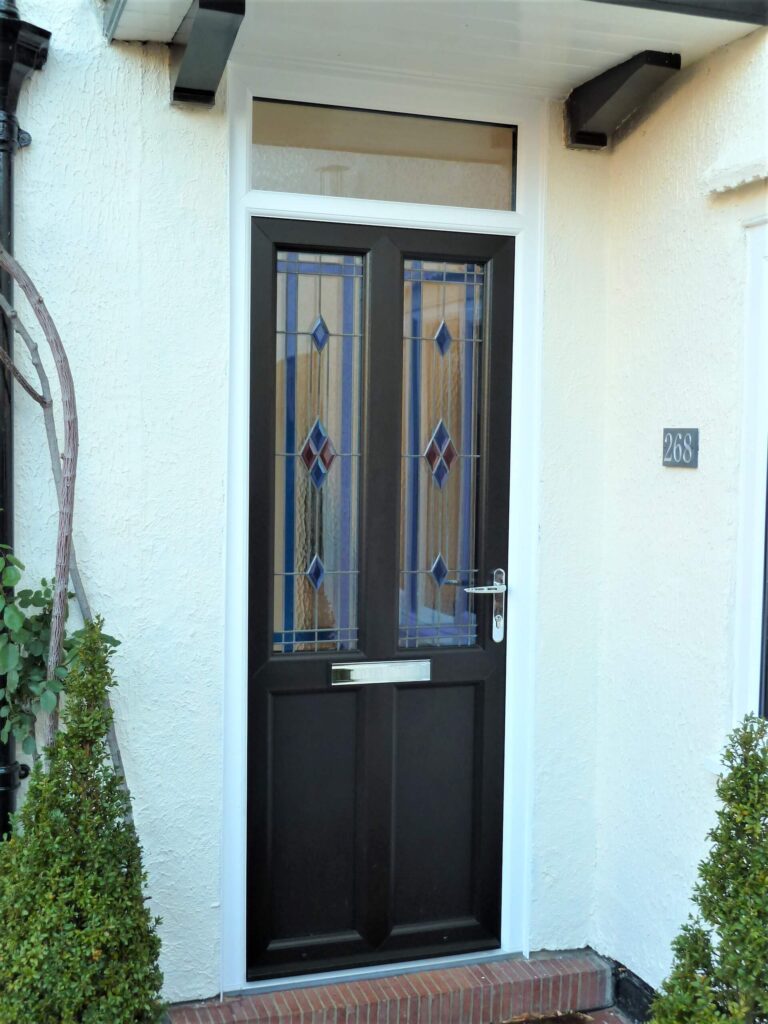
Composite doors, on the other hand, are manufactured from a combination of materials including wood and PVC.
They typically have a timber core and an insulating foam layer. The materials are layered with an adhesive and then placed under high pressure to form a solid and quality door that’s built to last.
At Comp Door, our composite doors are made with a strong Albasia Falcata timber core which offers enhanced thermal efficiency and security. They are also coated with CoolSkin technology designed to withstand changes in temperature and impact, and offer an industry-leading U-value of 1.4 W/m²K.

To create your unique Comp Door, use our design tool below.
Simple and easy upkeep: uPVC doors are low maintenance because they don’t need staining or painting unlike timber.
Weatherproof: They are designed to withstand extreme wind and rain.
Recyclable: uPVC can be recycled many times without reducing the quality of the product.
Budget-friendly: uPVC doors are one of the most affordable options on the market, making it a good option for homeowners on a budget.
Limited choices: Because uPVC doors are manufactured from a single material, they are limited in design and colour. Composite doors on the other hand come in a range of colours and styles.
Become brittle over time: uPVC can become brittle over time, especially if it’s nearing the end of its lifecycle.
Robust design: With an insulating core and multi-layer composition, composite doors are one of the most robust doors on the market, able to withstand even the most extreme weather conditions. They are also thicker than uPVC doors.
Unlimited designs: Composite doors are available in a range of colours, styles and finishes so you can find the perfect entrance door to match your home or commercial property. For more information on composite door design and colour options, visit our range here.
Improved security: With a multi-layer composition and anti-snap locks, composite doors can secure your home and provide the ultimate barrier against any unwanted intruders.
Reduced energy bills: Designed with a multi-layer structure and weathertight seals, a composite door can improve the thermal efficiency of your home and reduce your energy bills.
Low maintenance: Composite doors are incredibly low maintenance and they don’t need staining or painting unlike timber. A wipe down with a clean cloth and warm soapy water is enough to keep your composite door looking fresh. For more information on maintenance, visit our article on how to look after your composite door.
Reduces noise levels: Composite doors also help with noise reduction, which is perfect if you live nearby a busy road.
Higher upfront cost: While composite is more expensive than uPVC because of its strength and stability, it’s incredibly durable. It can last well over 30 years if taken care of, compared to uPVC which tends to last around 20 to 25 years.
Composite doors creak: Some composite doors can make creaking sounds if they are exposed to heat. But they are still structurally secure and solid. Our composite doors are encapsulated in CoolSkin technology which makes it highly resistant to temperature changes, and it has an auto slam shut lock to minimise thermal movement.
Composite doors tend to be the superior option, providing a more secure and energy-efficient front door.
Compared to uPVC, composite doors are stronger because of the high pressure manufacturing process and quality materials used. While uPVC is durable, it can fade over time but the protective layer on a composite door prevents this while protecting it from extreme weather, temperature changes, impact and discolouration. The doors are also thicker than uPVC which improves energy efficiency and offers a sound barrier from any outdoor noise.
Composite doors come in over 250 colours and a range of styles to match your exterior design while creating an inviting and welcoming environment. The doors can also be fitted with different styles of glass like toughened, bevels, and double and triple glazed to give off a luxury feel.
At Comp Door, we work with top security experts to design highly secure composite doors. They feature ABS locks which prevent intruders from snapping, picking and drilling the lock, and have three star-rated locks by the Police Security Initiative. The locks have also been tested by the Master Locksmith Association, achieving a Sold Secure Diamond grade – the highest security standard for locks in the UK.
Visit our security page to find out more.
Composite doors have a higher upfront cost when compared to uPVC doors but that’s because the quality, strength and security is superior. uPVC doors are popular for their affordability but they do have a shorter lifespan of around 20-25 years, compared to composite which can last well over 30 years.
Composite doors are also insulated and energy efficient which leads to long term cost savings on energy bills. With a highly advanced locking system, they also offer peace of mind.
Composite doors can help homeowners cut down on their energy consumption because they are insulated with a 48mm solid timber core. The thicker build and multi-layer structure can keep the cold out especially when combined with a TriSeal, which reduces cold drafts and prevents rain or moisture from entering. Because they are designed to last, you won’t need to replace them as often too.
Composite doors are a fantastic investment for your home. Not only do they help secure it, they look incredibly stylish and help you cut down on your energy bills. With our CoolSkin technology, they have an enhanced lifespan and are protected against extreme weather conditions.
At Comp Door, our range of door designs have been carefully selected by our in-house door experts to include the latest trends and timeless classics. So, whether you’re looking for a door to match the traditional style of your home or something more contemporary, we have something to suit every type of property.
With over 250 colour combinations to choose from, inside and out, we’re guaranteed to have the perfect door for your home or business here at Comp Door. Request a brochure online today or contact our sales team on 01782 340444 for more information and advice.
Choosing a new entrance door comes down to personal factors such as budget and style. However, it is important to consider that a composite door will offer more durability than a uPVC door and is likely to cost you less in the long run.
Yes. Replacing your current underperforming uPVC door with a composite door can provide you with a more stylish, secure and thermally efficient front door.
Yes. Due to the high intensity manufacturing process and costly materials that are used to make a composite door, they are generally more expensive than uPVC.
Yes. Composite doors may come at a higher price point than uPVC alternatives, however they last much longer and are more thermally efficient. Opting for a composite door can provide you with a great return on your investment, increasing the energy-efficiency of your home.


